

Gothic
COMMONPLACE JOURNAL ENTRY #3

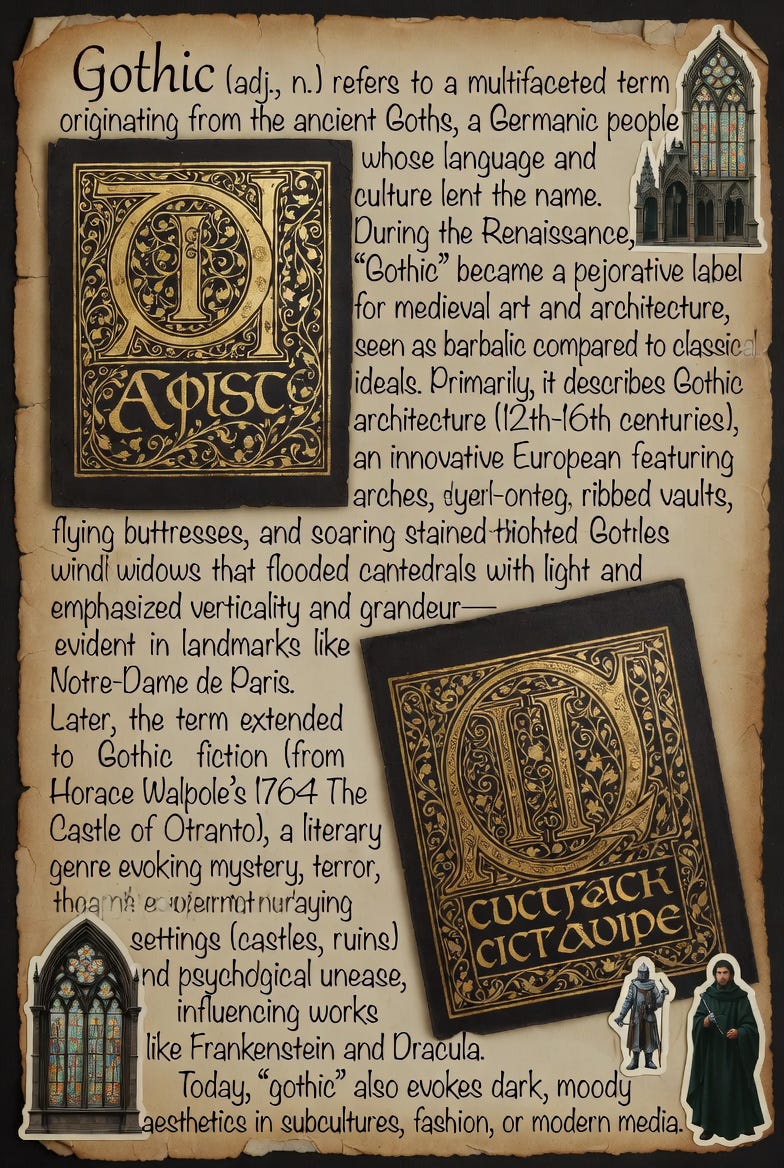
Gothic
(adj., n.)
The term refers to a multifaceted term originating from the ancient Goths, a Germanic people whose language and culture lent the name. During the Renaissance, “Gothic” became a pejorative label for medieval art and architecture, seen as barbaric compared to classical ideals.
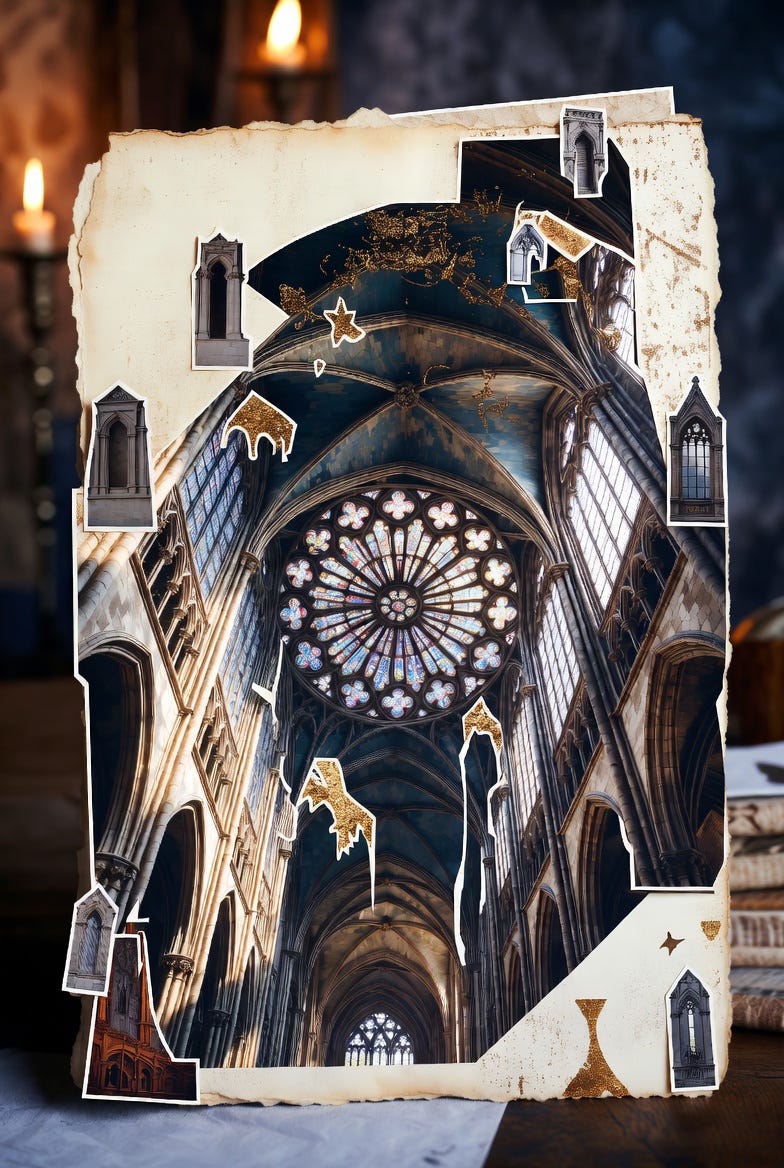
Primarily, it describes Gothic architecture (12th–16th centuries), an innovative European style featuring pointed arches, ribbed vaults, flying buttresses, and soaring stained-glass windows that flooded cathedrals with light and emphasized verticality and grandeur, evident in landmarks like Notre-Dame de Paris.
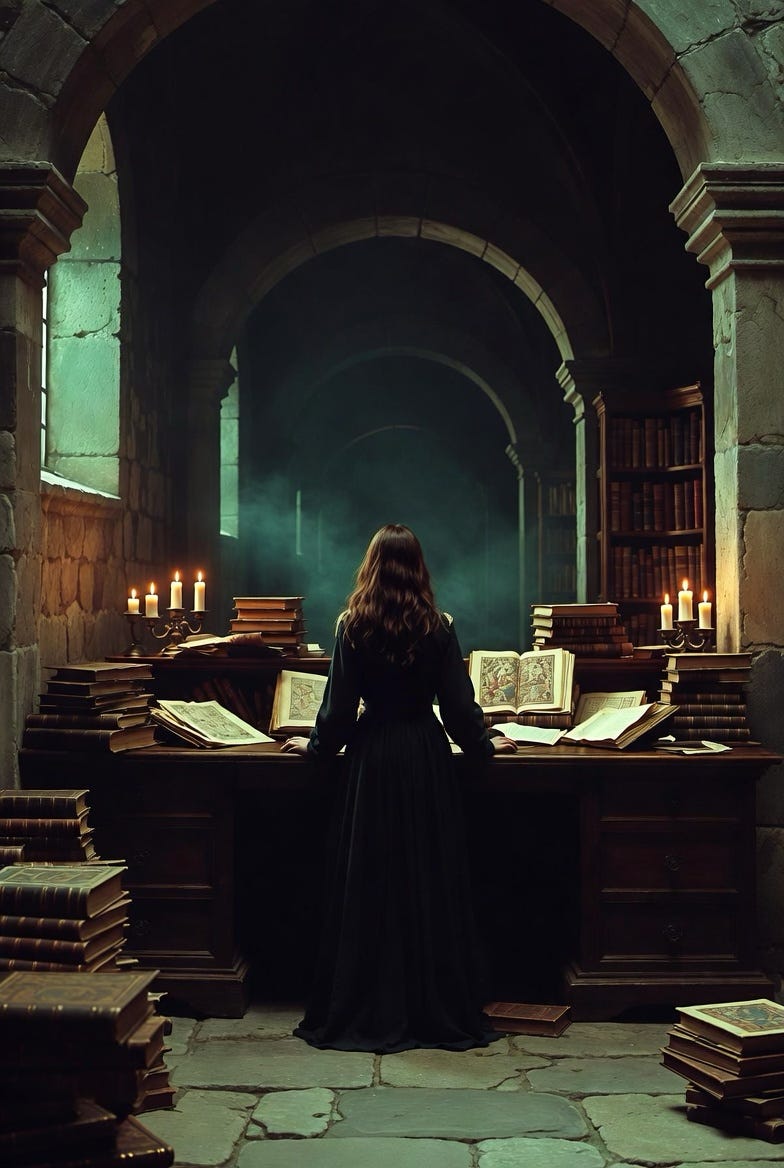
Later, the term extended to Gothic fiction (from Horace Walpole’s 1764 The Castle of Otranto), a literary genre evoking mystery, terror, the supernatural, decaying settings (castles, ruins), and psychological unease, influencing works like Frankenstein and Dracula.
Today, “gothic” also evokes dark, moody aesthetics in subcultures, fashion, or modern media.


Thank you for reading.
Stay Enchanted!
- EJ 🌖